

This has become a routine in my OPD.
A woman in her late 40s opens her blood test report on her phone. Most of the pages look familiar. She has been tested before, and her previous reports were all unremarkable. Her blood sugar, liver tests, haemoglobin and everything else are normal.
Then she reaches the lipid panel, and her LDL cholesterol is higher than it has ever been.
"This is probably because I stopped walking."
"Maybe because I ate outside food."
"Maybe because I ate too many eggs."
"I should have been exercising as regularly as I was told to."
By the time a woman with results like this reaches me, she has already put herself on trial.
Is it ageing? Is it being less disciplined about lifestyle and diet? Is it the hormones?
Honestly, a little bit of everything. Genetics matter, diet matters, body composition matters, and so do thyroid disease, diabetes and some medications. Age matters, and, as we will see, reproductive ageing appears to matter too.
What happens to the lipid profile around menopause?
A common assumption is that at menopause cholesterol simply goes bad, with every number on the report moving the wrong way at once. But women in midlife are also getting older, and several of these numbers drift upward with age, whatever the ovaries are doing.
The most useful answer comes from SWAN (the Study of Women's Health Across the Nation), which followed women through midlife and showed that the lipid parameters become deranged in this period [1].
LDL cholesterol: the clearest menopause-linked signal
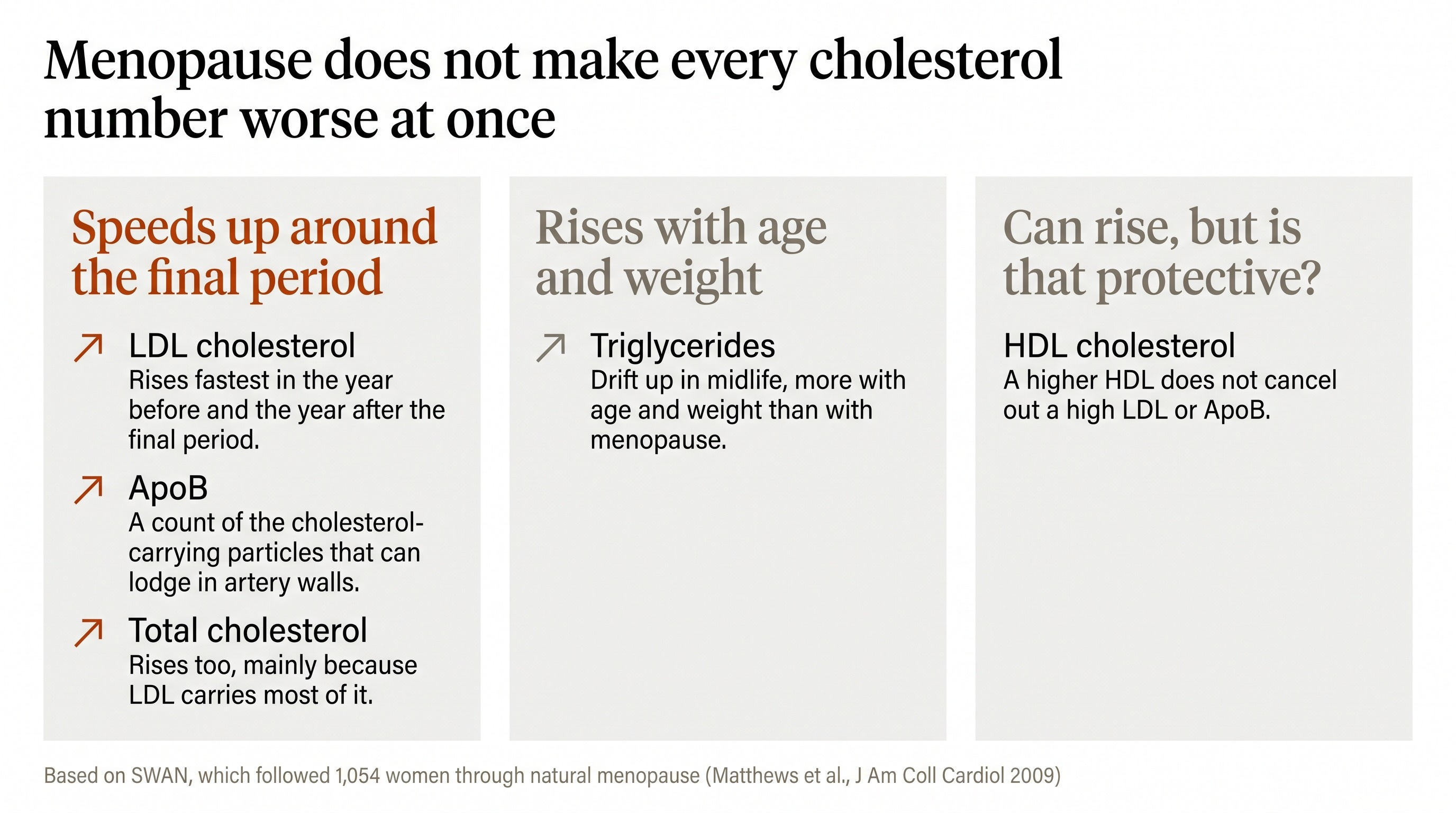
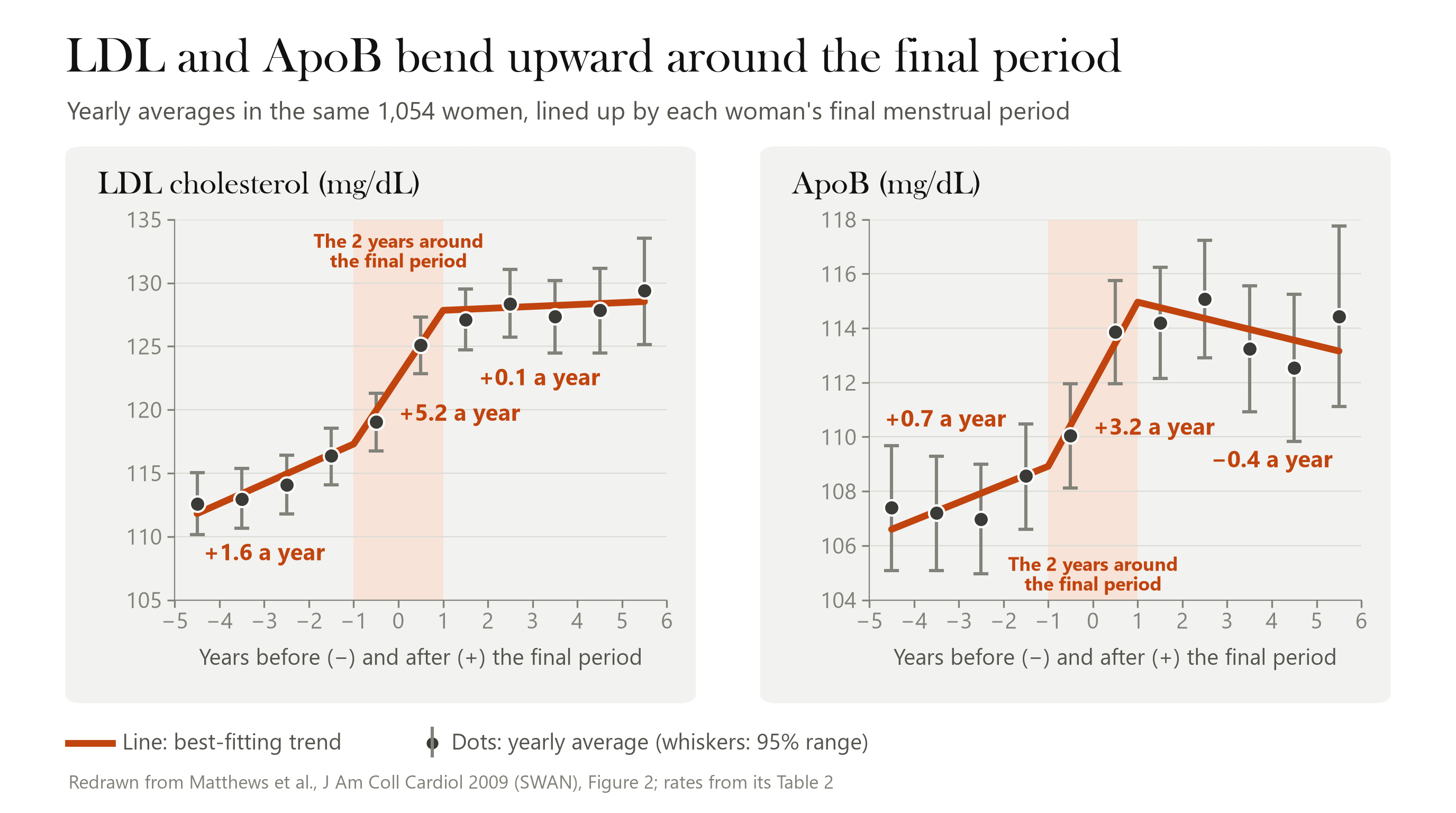
LDL cholesterol was one of only three measurements that sped up in the two-year window around the final menstrual period, over and above the background age-related rise [1]. This held after accounting for weight and weight change, smoking, diet and physical activity, and the pattern was similar across all the ethnic groups studied [1].
Total cholesterol
Total cholesterol was the second of the three measurements that sped up around the final period [1]. That is largely because LDL carries most of the cholesterol in the blood, so the two move together. Total cholesterol adds little beyond LDL-C here; I mention it mainly so that the number on your report makes sense.
ApoB: counting the particles
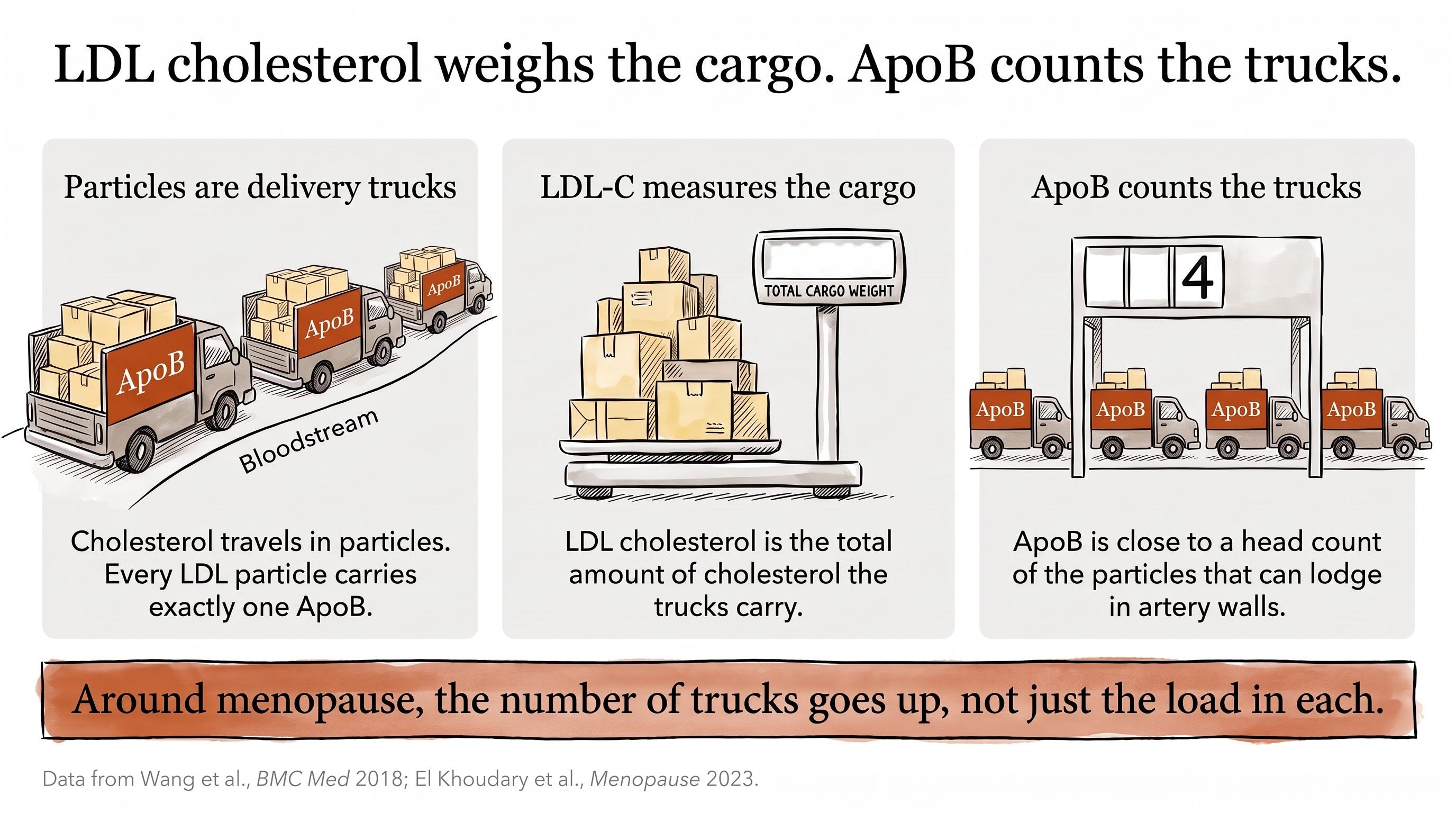
ApoB was the third [1]. Every LDL particle, and every related particle that can lodge in an artery wall, carries exactly one ApoB protein. ApoB is therefore close to a head count of those potentially harmful particles, whereas LDL-C measures how much cholesterol they carry.
ApoB rose around the final period in step with LDL-C [1]. Studies that counted particles directly found that LDL particle numbers increase across the transition [2, 3]. So the change is not just more cholesterol packed into the same particles.
Triglycerides: more about age and weight than menopause
Triglycerides do rise in midlife. Postmenopausal women have higher triglycerides on average, but a distinct menopause-driven jump has not been clearly shown [1]. Weight, waist size and insulin resistance are likely to matter more. This is the age and stage of life when these (waist circumference, weight and insulin resistance) can change in women, resulting in higher triglycerides.
Is it related to menopause? Not clearly.
Is the increase seen in the same period as your menopause? Yes.
That is why I mention it: you might see a bump in your triglycerides when you look at your lipid profile.
HDL cholesterol: is a higher number protective?
You might come across studies showing that HDL increases around menopause [1, 4]. You might also have read newsletters or blog articles claiming that this could be protective. I certainly came across such articles while researching the piece you are reading now.
The point I want you to take home is that an HDL value, even a rising one, does not cancel out an elevated LDL-C or ApoB. In SWAN, HDL cholesterol rose across the transition while the HDL particles themselves changed in less favourable ways [4].
The bottom line
Menopause does not make every lipid number worse at once. The most consistent change tied to the final period itself is a rise in LDL-C and ApoB, meaning more of the particles that build plaque. Triglycerides rise, mostly with age and weight, not clearly because of menopause itself.
Why do these lipid changes occur? Is it menopause, ageing, or both?
Now the harder question: why do these changes happen?
Menopause arrives in the middle of a decade when blood pressure, weight and blood sugar tend to creep up anyway, simply with age. So if you compare a 45-year-old woman who still has periods with a 57-year-old who does not, the older woman will usually have higher cholesterol. That comparison cannot tell you whether menopause did it, or the twelve extra years did. "Older" and "postmenopausal" are different things scientifically, but in real life they almost always arrive together.
The way around this is to follow the same women over time and line up each woman's data against her own final menstrual period, which happens at 47 for one woman and at 55 for another. That separates the menopause clock from the calendar clock. If ageing alone were driving cholesterol, it should rise at a steady rate. If menopause adds something, the rise should bend upward around the final period. In SWAN, LDL-C, total cholesterol and ApoB did show that bend, and it remained after accounting for age at menopause, weight change, smoking, diet and physical activity [1].
A UK study reached a similar conclusion by comparing women who aged by the same amount over two and a half years: those who became postmenopausal saw a larger rise in LDL and related particles than those who did not [2]. What this does not prove is cause. Nobody can randomise women to menopause, and timing alone does not tell us which biological change is responsible. It does tell us that LDL-C and ApoB have a menopause-associated component that age alone does not explain.
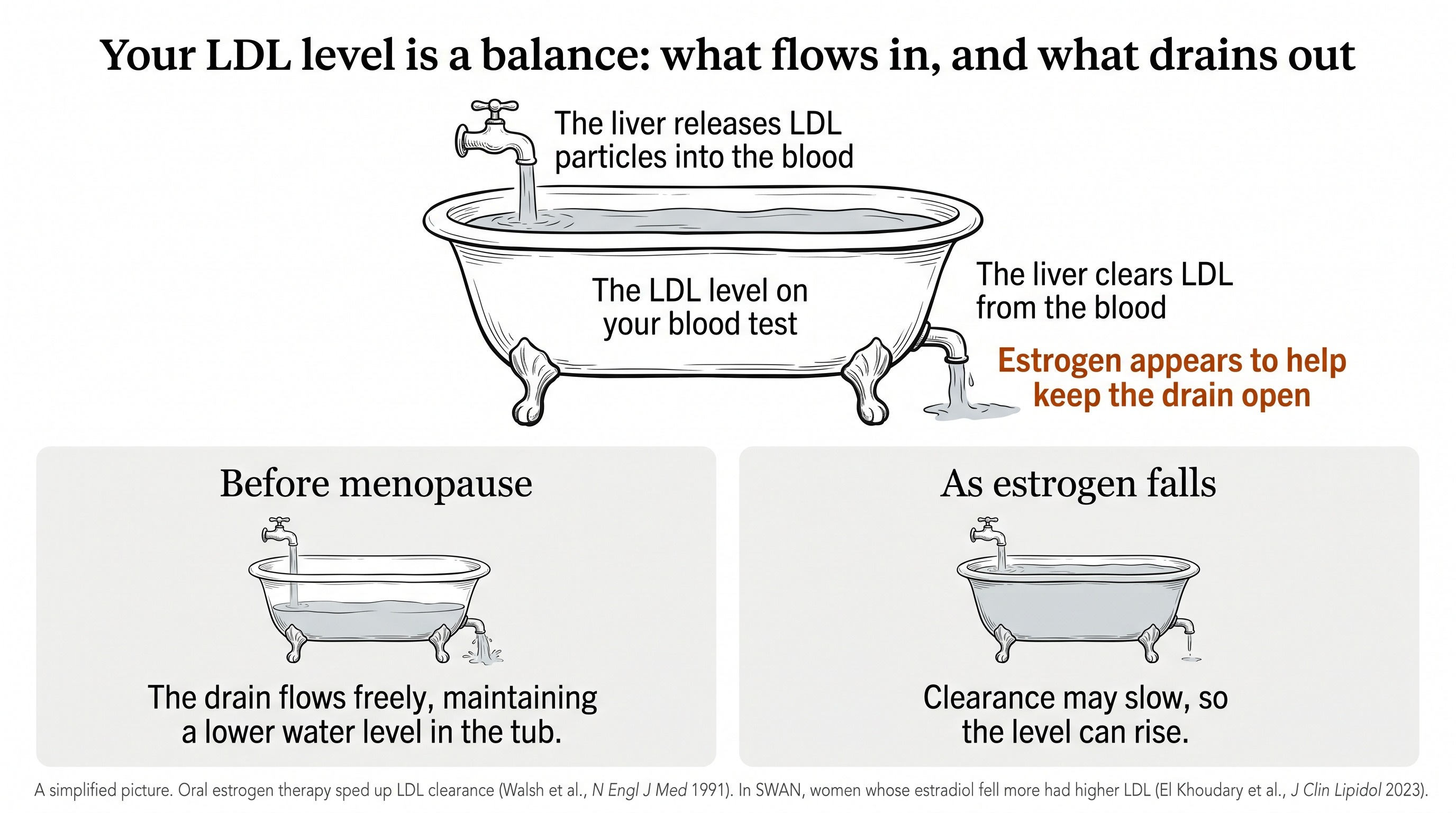
The most plausible contributor is the change in ovarian hormones, particularly estrogen. The LDL level in your blood reflects a balance between how much the liver releases and how quickly it is cleared, mainly by the liver again. Estrogen appears to influence that clearance [5]. In SWAN, women whose estradiol fell more across the transition tended to have higher LDL-C and total cholesterol [6].
That leads naturally to the next question. If changing ovarian hormone exposure contributes to the LDL rise, does replacing estrogen reverse it? And, more importantly, would that translate into fewer heart attacks and strokes? Those are different questions, with different answers, and they deserve a section of their own.
Does hormone therapy improve the lipid profile, and should it be used to protect the heart?
If falling estrogen contributes to the LDL rise, it seems logical that replacing estrogen should lower LDL and protect the heart. That sounds like one question. It is actually three. Does hormone therapy change the cholesterol numbers? Does it change the arteries? And does it lead to fewer heart attacks and strokes? Each has its own evidence, and the answers are not the same.
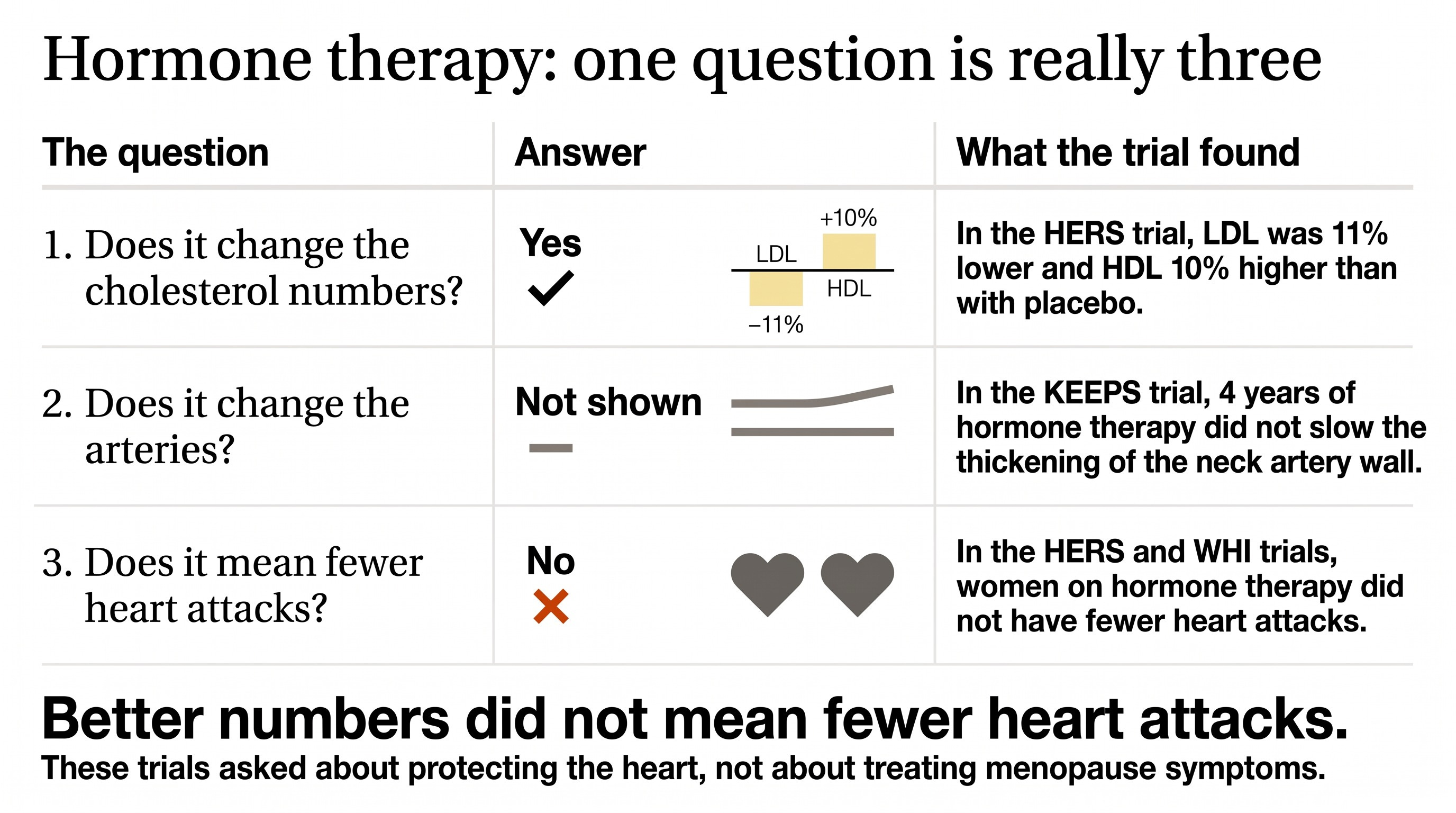
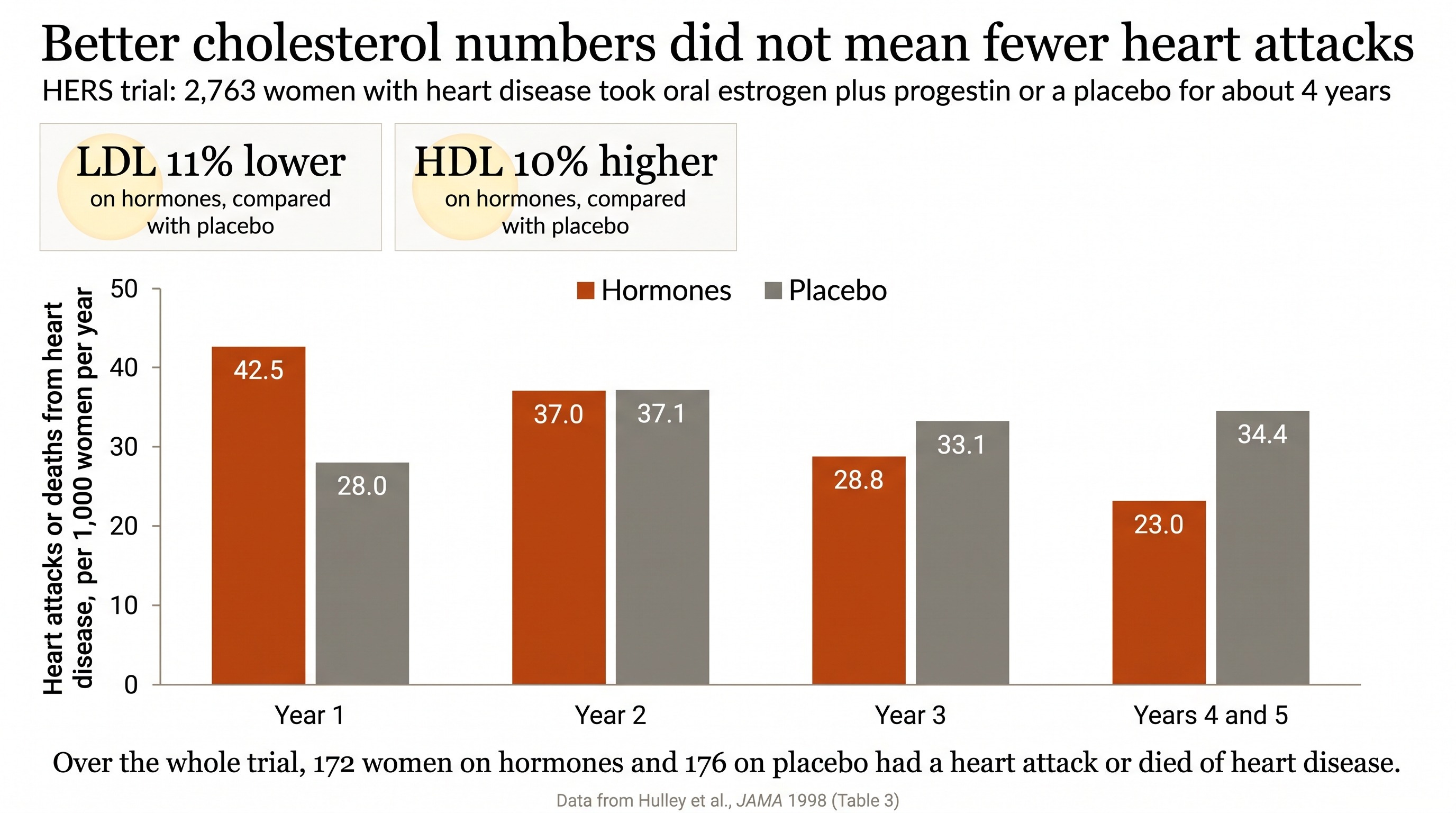
On the first question, the answer is yes. In a large randomised trial of women with heart disease, combined estrogen and progestin lowered LDL-C by about 11% and raised HDL-C by about 10% compared with placebo [7]. In a trial of recently menopausal women, oral estrogen improved LDL-C and HDL-C, whereas estradiol given through the skin had less effect on those numbers but improved insulin resistance [8]. Estrogen taken by mouth can also raise triglycerides [5]. So hormone therapy does not have one uniform effect on the lipid panel. The effects vary with the dose, the formulation, the route and the progestogen used, which is one reason treatment has to be individualised [9].
The second and third questions are where intuition fails. That same trial of women with heart disease, HERS, found no reduction in heart attacks or coronary deaths over four years, despite the LDL and HDL changes [7]. There were more coronary events in the hormone group in the first year, and fewer in years four and five [7]. In the Women's Health Initiative (WHI), combined estrogen and progestin in generally healthy women also failed to reduce coronary events, with the excess concentrated in the first year of treatment [10].
The lesson is not that LDL doesn't matter. Lowering LDL by other means reduces heart attacks; the evidence for that is extensive [11]. The lesson is that a hormone does many things at once. It changes lipids, but also clotting, inflammation and the blood vessels themselves; oral estrogen raised C-reactive protein in one trial, for example [8]. An LDL number captures one of those effects. Only trials that count actual heart attacks and strokes capture the net result.
Major guidelines frame menopause as the time to assess cardiovascular risk rather than treat it with hormones [12, 13]. A high LDL-C is not by itself a reason to start hormone therapy, and hormone therapy is not a substitute for lipid-lowering treatment when that is needed. As a cardiologist, my role is not to decide whether you need hormone therapy for your symptoms. It is to make sure that your heart and blood-vessel history, including previous clots, stroke and coronary artery disease, is part of that decision.
When should women have their lipids checked?
Screening starts long before menopause
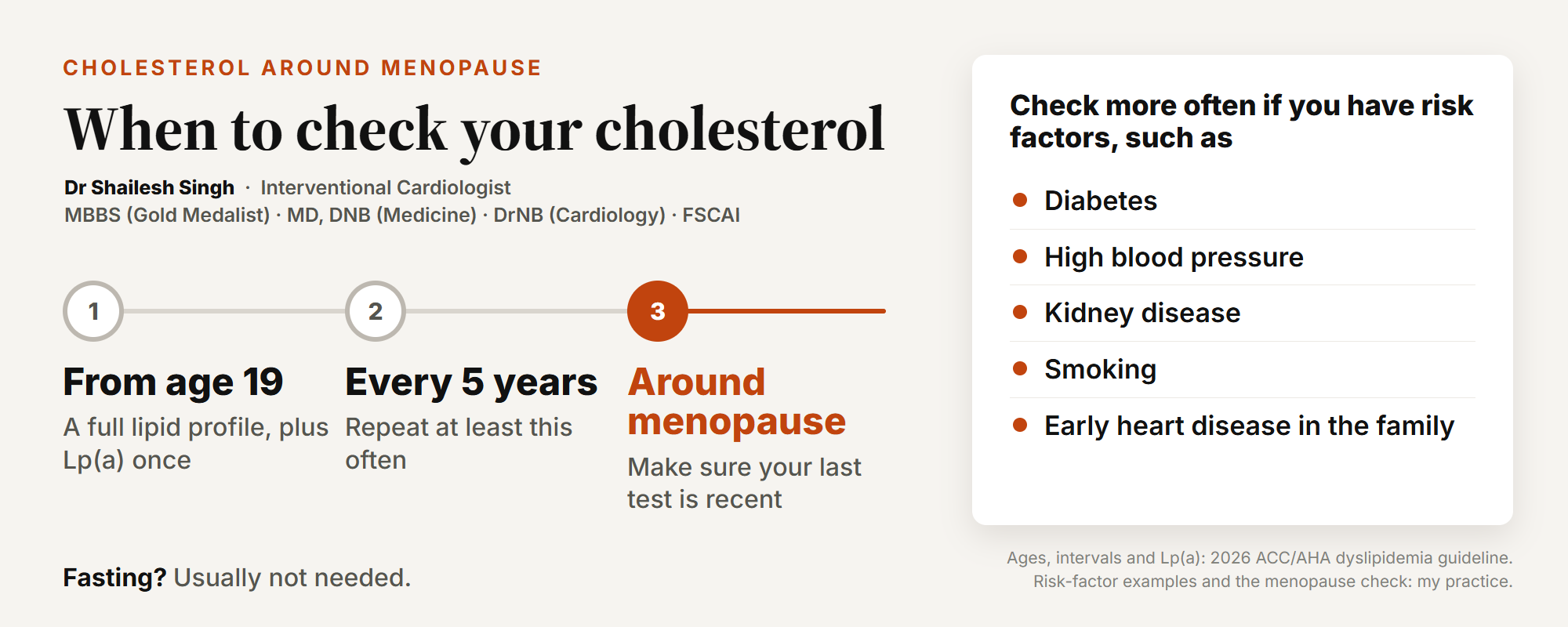
No woman should be seeing her cholesterol for the first time at menopause. The 2026 ACC/AHA dyslipidemia guideline recommends a lipid profile for every adult from age 19, repeated at least every five years, and more often for those with additional cardiovascular risk factors [11].
To be fair to the evidence, no trial has shown that screening young adults reduces heart attacks. The recommendation rests instead on LDL's well-established causal role, effective treatment and a cheap test [11].
Honestly, the 2026 ACC/AHA guideline does not recommend testing lipids just because you are in perimenopause [11]. My own reading is this: if your last lipid panel was taken before the transition, it is reasonable to make sure you have a current one around it.
Some women need more frequent checks regardless of menopause. The guideline advises more frequent testing for people with additional cardiovascular risk factors [11]. In practice, that means diabetes, high blood pressure, kidney disease, smoking or a strong family history of early heart disease.
What should be measured?
Usually a standard lipid profile, plus a one-time Lp(a) test if it has never been measured [11].
For most people fasting is unnecessary, because LDL-C changes little after a normal meal [11]. A fasting test should be done if a non-fasting triglyceride level comes back at 400 mg/dL or higher, if a triglyceride disorder is known or suspected, or if there is a family history of lipid disorders or early heart disease [11].
What if the results are abnormal?
An abnormal result should prompt interpretation, not an automatic conclusion. That may mean looking for other causes such as thyroid disease or medications, asking about family history, and estimating overall risk [11].
Women deserve to know when their numbers are moving. The purpose of testing is not to label a result normal or abnormal. It is to recognise the change, understand what it means, and decide what to do based on her overall cardiovascular risk rather than on a single line of a lab report.
What we don't want is prolonged, undiagnosed exposure to high LDL, or a high LDL caught only after a cardiac event [11].
References
Matthews KA, Crawford SL, Chae CU, et al. Are changes in cardiovascular disease risk factors in midlife women due to chronological aging or to the menopausal transition? J Am Coll Cardiol. 2009;54(25):2366-73. doi:10.1016/j.jacc.2009.10.009
Wang Q, Ferreira DLS, Nelson SM, et al. Metabolic characterization of menopause: cross-sectional and longitudinal evidence. BMC Med. 2018;16(1):17. doi:10.1186/s12916-018-1008-8
El Khoudary SR, Chen X, Wang Z, et al. Low-density lipoprotein subclasses over the menopausal transition and risk of coronary calcification and carotid atherosclerosis: the SWAN Heart and HDL ancillary studies. Menopause. 2023;30(10):1006-13. doi:10.1097/GME.0000000000002245
El Khoudary SR, Chen X, Nasr A, et al. HDL (high-density lipoprotein) subclasses, lipid content, and function trajectories across the menopause transition: SWAN-HDL study. Arterioscler Thromb Vasc Biol. 2021;41(2):951-61. doi:10.1161/ATVBAHA.120.315355
Walsh BW, Schiff I, Rosner B, et al. Effects of postmenopausal estrogen replacement on the concentrations and metabolism of plasma lipoproteins. N Engl J Med. 1991;325(17):1196-204. doi:10.1056/NEJM199110243251702
El Khoudary SR, Chen X, Qi M, et al. The independent associations of anti-Müllerian hormone and estradiol levels over the menopause transition with lipids/lipoproteins: the Study of Women's Health Across the Nation. J Clin Lipidol. 2023;17(1):157-67. doi:10.1016/j.jacl.2022.11.008
Hulley S, Grady D, Bush T, et al. Randomized trial of estrogen plus progestin for secondary prevention of coronary heart disease in postmenopausal women. Heart and Estrogen/progestin Replacement Study (HERS) Research Group. JAMA. 1998;280(7):605-13. doi:10.1001/jama.280.7.605
Harman SM, Black DM, Naftolin F, et al. Arterial imaging outcomes and cardiovascular risk factors in recently menopausal women: a randomized trial. Ann Intern Med. 2014;161(4):249-60. doi:10.7326/M14-0353
The 2022 hormone therapy position statement of The North American Menopause Society. Menopause. 2022;29(7):767-94. doi:10.1097/GME.0000000000002028
Manson JE, Hsia J, Johnson KC, et al. Estrogen plus progestin and the risk of coronary heart disease. N Engl J Med. 2003;349(6):523-34. doi:10.1056/NEJMoa030808
Blumenthal RS, Morris PB, Gaudino M, et al. 2026 ACC/AHA/AACVPR/ABC/ACPM/ADA/AGS/APhA/ASPC/NLA/PCNA guideline on the management of dyslipidemia: a report of the American College of Cardiology/American Heart Association Joint Committee on Clinical Practice Guidelines. J Am Coll Cardiol. 2026;87(19):2624-2757. doi:10.1016/j.jacc.2025.11.016. Also published in Circulation. 2026;153(17):e1154-e1276. doi:10.1161/CIR.0000000000001423
El Khoudary SR, Aggarwal B, Beckie TM, et al. Menopause transition and cardiovascular disease risk: implications for timing of early prevention: a scientific statement from the American Heart Association. Circulation. 2020;142(25):e506-32. doi:10.1161/CIR.0000000000000912
US Preventive Services Task Force. Hormone therapy for the primary prevention of chronic conditions in postmenopausal persons: US Preventive Services Task Force recommendation statement. JAMA. 2022;328(17):1740-6. doi:10.1001/jama.2022.18625